
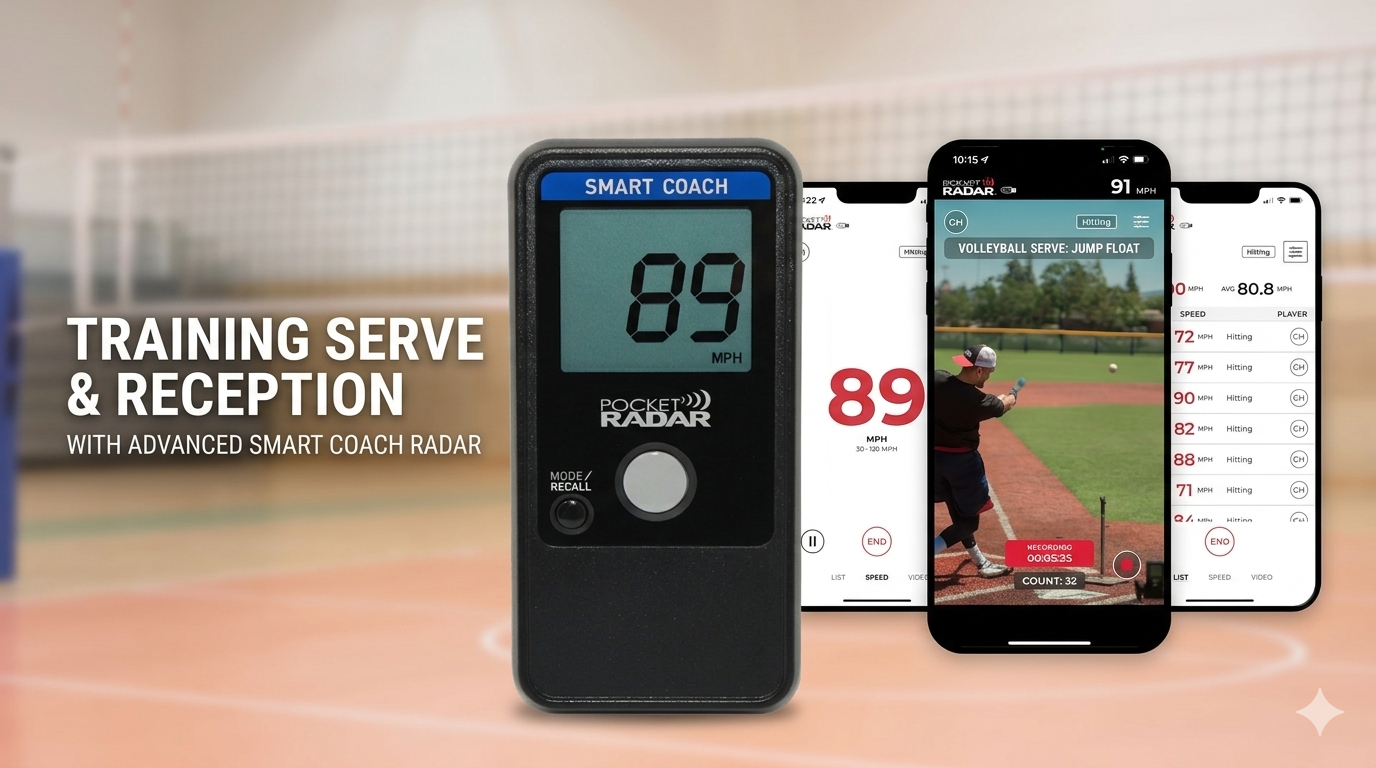

First of all, let’s start with the fact that serving and receiving are two extremely important fundamentals to train. As Julio Velasco rightly points out, in every action, you are either serving or receiving; therefore, these two fundamentals carry significant weight within the game. Consequently, by necessity, these two skills must be trained constantly, in every practice session.
Motivation and Objectives in Training
Clearly, this type of drill can sometimes be a bit boring or repetitive for players because it can be difficult to find a specific stimulus for this kind of training. It is probably easier for receivers, for whom we can set specific goals within the exercises we propose. For example, a 7 out of 10 positivity rate for “+” and “++” passes, or, depending on the level, perhaps a 6 out of 10. It could be a specific goal against a jump spin serve versus a float serve. Thus, receivers have a better chance of receiving feedback, especially if we include a setter; the receiver can see almost immediately what happens—whether the setter can play any combination or if they struggle and can only set a high ball.
The server, on the other hand, likely has fewer opportunities to receive continuous feedback on what they are doing. Of course, feedback for the server can be the ace they score, a “slash” ball, or a ball forced off the net that the setter can only play high. However, they generally lack feedback on the actual quality of the work they are performing in that specific moment.
Using Radar to Measure Quality
In this sense, adding a tool that can measure the quality of the serve can be decisive in changing the quality of the drill. In this regard, a radar, which detects speed, can certainly play a very important role within our team because, through the radar, the player serving can evaluate the quality and “weight” of their serve with immediate feedback.
How the Radar Works
So, how does this system work? The radar is a tool applied at a height of about 2.5 meters on a support behind the court, and it detects every ball that goes from one side to the other, even at significant distances. Therefore, it works for both the server directly in front of the radar and the server on the opposite side, allowing for a wide range of work. This radar has an app that can be easily installed on a tablet or phone. Through the device, you can, for example, mirror the display to a monitor or an old TV with an HDMI cable, allowing players to visualize the speed of the serve.
Practical Application and Serving Series
What is the purpose of this? Obviously, it should not just be a tool placed there for players to look at how fast they hit. The tool is used to create a sequence for the players. Let’s imagine a sequence of 20 serves: within these 20 serves, the players must have objectives. First, the goal is to identify the average speed of their serve, perhaps through preliminary or practice serves before starting the series. Then, the objective given to the players will be to stay above a certain execution speed for a consecutive number of times. For example, jump spin servers must hit 4 consecutive serves at or above a specific speed. You can also set a target zone, so these 4 serves can be directed towards zone 6-1 or zone 6-5, or it can simply be an open goal where the only requirement is to stay above a certain speed.
Clearly, the series can be decided in various ways: it could be 4 or 5 serves, depending on the quality of the server. For example, for jump-float servers, the series could be longer: if we set 4 for spin servers, it could be 5 for float servers, but always with a parameter that the servers must stay above.
Conclusion and Benefits
This certainly raises the level of training for this fundamental which, I repeat, can be a bit boring for players without immediate feedback. Instead, with this type of immediate, visual, and clear feedback, the drill becomes much more interesting, stimulating, and productive; the work being done is significantly more effective.
As for the receivers, they also have the opportunity to see the speeds and understand how they are reacting, perhaps to a particularly strong spin serve from a specific player. Therefore, they also receive immediate feedback that isn’t just about a positive reception, but also about handling a serve—say, over 90 km/h or over 100 km/h—and keeping it playable.
This provides additional feedback for the receivers. It is definitely a tool that greatly improves the quality of work in serving and receiving training. There are many tools available, but the best one I have identified, which is also used by several national team staffs, is Pocket Radar, available on Amazon for $399. This is an affordable price that certainly elevates the quality of work on these fundamentals.
Integrating a radar gun into your serve and reception sessions is one of the simplest upgrades you can make to a drill that players often find repetitive. The data is immediate, objective, and visible to everyone on the court — and that changes the intensity of the work without changing the drill itself.
If you want to take your analytical approach further and learn how to connect training data with match statistics, I offer personalised one-to-one coaching sessions on Data Volley — the professional scouting software used at the highest levels of the game. Whether you are new to the software or looking to deepen your ability to read and present data to your coaching staff, we can build a programme around your specific needs.